
Your Partners in Health Professions Program Development & Accreditation
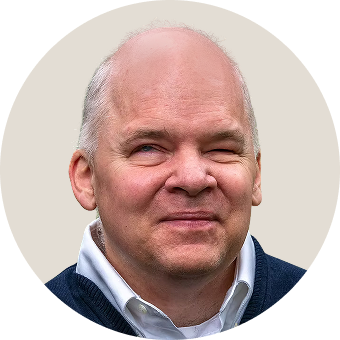
Dr. Matthew A. Weed, Ph.D
Matthew A. Weed, Ph.D is our Chief Academic Officer, bringing both deep personal and professional experience across academic health and research. He has mentored hundreds of health professionals, taught thousands, and helped build a $150M research center. His work focuses on improving patient outcomes, and strengthening healthcare accessibility, at home and at work.
Dr. Weed is a totally blind, very brittle type I diabetic of five decades standing. He holds degrees from Yale, Princeton, and Harvard, and brings that lived experience to transform health and education.
BIOGRAPHY
Dr. Matthew Weed is the General Manager and Chief Academic Officer for Academic Health Associates. He leads academichealthassociates.com’s rapidly growing health professions training program development and accreditation activities. He also engages resources from our numerous partners and beyond to increase opportunities for our partner organizations while helping health professionals better understand how patients manage their health at home and work and how everyone can make the clinic and at home care more accessible for all. This part of his work is helping reduce costs and improve outcomes for patients, caregivers, health professionals and society as a whole.
Dr. Weed is a totally blind type I diabetic three time Yale graduate, including his Ph.D. in Genetics earned in 2004. He also has master’s degrees in Public Affairs and Genetics earned at Princeton and Harvard in 1995 and 1996, respectively. While an undergraduate at Yale, Dr. Weed co-created an early method for making electronic text available to the blind in 1990. The Yale Text Scanning system was three times more efficient with respect to cost and employee time in producing usable product, and its output was 10,000 times more space efficient than recording books to audio tapes which was the standard at that time. Electronic text also allowed users to search for information far more efficiently than scanning through audio tapes. He has mentored, hundreds of student caregivers, most of whom are now health professionals and scientists in more than half of US states and many countries around the world.
After post-doctoral involvement in bio ethics and medical education at Yale, he became the Interim Associate Director of the $150 million Wisconsin Institute for Discovery at the University of Wisconsin-Madison which he helped launch in 2010-2012. He then became a Yale- Hastings fellow in bioethics from 2013-15, while growing his interest in accessibility, speaking, and health professions training reform. Dr. Weed helped build programs for students with disabilities at Yale, Princeton, and the University of Wisconsin-Madison. He has been an accessibility consultant for numerous schools and government institutions. During his dissertation work, he was an informal adviser on embryonic stem cell and human cloning research and policy to the Acting Director of the National Institutes of Health.
After post-doctoral involvement in bio ethics and medical education at Yale, he became the Interim Associate Director of the $150 million Wisconsin Institute for Discovery at the University of Wisconsin-Madison which he helped launch in 2010-2012. He then became a Yale- Hastings fellow in bioethics from 2013-15, while growing his interest in accessibility, speaking, and health professions training reform. Dr. Weed helped build programs for students with disabilities at Yale, Princeton, and the University of Wisconsin-Madison. He has been an accessibility consultant for numerous schools and government institutions. During his dissertation work, he was an informal adviser on embryonic stem cell and human cloning research and policy to the Acting Director of the National Institutes of Health.
In his spare time, Dr. Weed reads, travels, enjoys outdoor activities, spends time with his two shelter rescue cats, and stays connected with his hundreds of past and current mentees.